Mufid Parking Shades: Next-Gen Tensile Architecture Rooted in Arabic Tents Heritage
When the brutal Gulf sun meets modern infrastructure, only high-performance shading can preserve assets and outdoor comfort. Mufid Parking Shades represent a paradigm shift in tensile carport engineering — merging structural intelligence with heat-reflective textiles. Surprisingly, this technology draws subtle inspiration from the vernacular genius of Arabic Tents (traditional *Beit Al Shaar*), which have shaded Bedouin communities for centuries. Today, Mufid transforms those principles into corrosion‑resistant steel frameworks and HDPE knitted mesh, delivering 95% UV blockage and drastically lowered surface temperatures beneath the canopy. This professional guide unpacks material science, structural typologies, and the economic logic behind choosing Mufid over conventional carports.
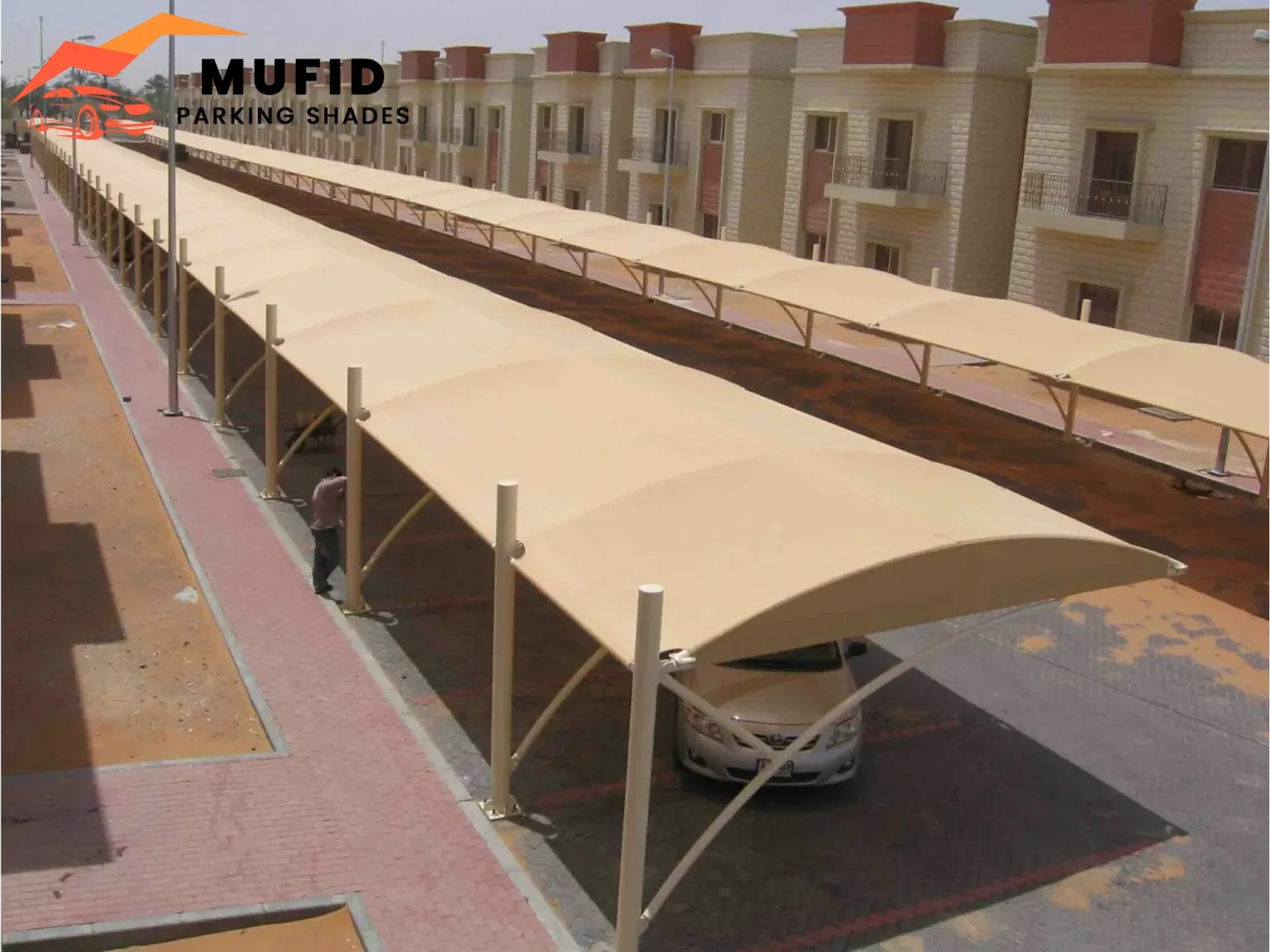
The Middle Eastern construction sector is increasingly moving toward hybrid forms: open, breathable shelters that combine the cultural memory of Arabic Tents with contemporary engineering demands. Mufid Parking Shades rise to this challenge by offering modular, wind-resistant canopies suitable for residential compounds, shopping malls, and logistic hubs. And unlike traditional fabric structures, these parking shades require almost zero maintenance while delivering a return on investment through vehicle preservation and cooler immediate microclimates.
From Arabic Tents to High-Tensile Parking Shade Systems
The ancestral Arabic Tents were marvels of low-impact design: woven goat hair expanded in humidity, naturally ventilated and blocked solar glare. But they were not built for permanent vehicle shading or heavy wind uplift. Mufid Parking Shades modernize that ethos using knitted high-density polyethylene mesh (HDPE) with UV stabilizers, married to hot-dip galvanized steel masts and catenary cables. The result is a permeable canopy that rejects up to 95% of solar radiation while allowing hot air to escape laterally.
These tensile systems fit directly into sustainable masterplans: they mitigate urban heat island effect, protect electric vehicles from battery overheating, and require far less concrete than solid carports. Industry experts often compare Mufid Parking Shades to modern tensile pavilions — lightweight yet structural, echoing the nomadic spirit of Arabic Tents without sacrificing safety codes.
Interestingly, the tensile architecture behind modern parking shades shares principles with classical tensile structures (Wikipedia), where fabric is prestressed to create stiffness. Mufid engineers deploy hyperbolic paraboloid (“hypar”) forms to eliminate flutter, ensuring decades of structural integrity across Abu Dhabi and Riyadh’s harsh climate.
Structural Families: Sail, Pyramid and Cantilever Configurations
Mufid Parking Shades are not one-size-fits-all. The company offers three main geometry families, each optimized for different wind loads and aesthetic profiles. The Sail shade uses flowing double-curvature, ideal for residential villas and hotel porte-cocheres. The Pyramid shade provides a more formal, monumental silhouette with enhanced center-column rigidity, suitable for mosques, schools, and government car parks. Finally, the Cantilever (H-frame) design eliminates front poles completely — perfect for gas stations, EV charging plazas, or any area requiring unimpeded vehicular access.
All models share the same core benefit: reduction of ambient temperature beneath the structure by up to 15°C compared to bare asphalt. The breathable mesh blocks infrared heat while preventing the greenhouse effect that solid metal roofs create. For facility managers seeking long-term durability, Mufid provides powder-coating in RAL colors and 10-year frame warranties against corrosion.
Why Tensile Mesh Outperforms Solid Carports
Conventional steel sheet carports become heat radiators during summer afternoons. In contrast, Mufid Parking Shades utilize open-weave HDPE that reflects sunlight and allows wind to wick away stored heat. It also stops UV rays from degrading car paint, dashboards, and leather interiors. Vehicles parked under Mufid shades maintain lower cabin temperatures, reducing A/C load and fuel consumption upon start. Meanwhile, solid alternatives block rain but trap rising heat — HDPE mesh solves that architectural friction elegantly.
Material Science: UV-Resistant Fabric and Heavy-Duty Frames
Every square meter of Mufid Parking Shades fabric integrates advanced UV inhibitors. The knitted structure does not fray or delaminate, offering tensile strength between 300 to 500 daN/5cm. The steel framework is hot-dip galvanized (minimum 85 microns) to withstand humidity and saline coastal air. Mufid also offers optional stainless steel hardware for luxury developments. The fabric’s shade factor is factory-rated between 90% and 95%, satisfying the strictest requirements of Dubai Municipality and local green building codes.
The same engineering logic is embraced in premium Arabic Tents for high-end events — but while those focus on elegance and hospitality, Mufid’s parking iterations emphasize robustness and zero interference with vehicle navigation. Moreover, the modular design means a parking lot can be extended gradually without demolishing existing foundations.
For those exploring similar design concepts, a detailed reference on car parking shade engineering parameters provides insight into load calculations and foundation types, though Mufid’s integrated turnkey approach remains industry-leading.
Installation, Foundations, and GCC Climate Resilience
Installing Mufid Parking Shades requires accurate geotechnical surveys and finite-element analysis. Unlike traditional Arabic Tents that rely on simple pegs, Mufid employs either concrete footings or helical screw piles, ensuring the shade structure resists wind speeds up to 120 km/h (UBC Zone 2B). The steel columns are pre-drilled and bolted; fabric membranes are tensioned using turnbuckles to maintain prestress across thermal cycles. This prevents sagging and fabric flutter — the main failure mode of cheap imported shades.
Because no internal columns are needed for the cantilever and sail variations, parking aisle layouts remain flexible. The post-installation maintenance includes annual fabric inspection and light cleaning with mild soap. HDPE does not absorb water, so mold and mildew are nonexistent in arid conditions. Mufid also offers a 5-year warranty on fabric against UV degradation (color fastness and tear strength).
Cost-Effectiveness and ROI for Residential Communities
Property developers often compare Mufid Parking Shades with precast concrete carports. Tensile structures cost roughly 30–45% less, thanks to reduced foundation volume and faster installation. Furthermore, shaded parking spaces increase tenant satisfaction and can be marketed as “premium cool parking” — a differentiator in hot climates. The shades also protect future investments like solar EV chargers, as the steel framework can support cable trays. In many communities, installing high-quality parking shades raises property appeal similarly to adding landscaped Arabic Tents style gathering areas but at a fraction of the cost.
Frequently Asked Realities: Durability, Warranty, and Aesthetics
Clients often ask whether Mufid Parking Shades can handle sandstorms. Yes — the high-tenacity polyester warp-knitted fabric resists abrasion and granular impact. The design eliminates horizontal pockets where dust could accumulate. After a storm, a simple blower or hose restores the fabric’s original look. Color options include terracotta, beige, gray, and forest green, allowing integration with Arabic Tents inspired courtyards or modern glass facades. Mufid also provides printed shading with logos for corporate branding.
Another advantage: rainwater runs off through the mesh without causing puddles above, eradicating the need for heavy drainage. For snow loads (in certain higher altitude areas), Mufid offers reinforced double-layer membranes. However, the primary market remains the Gulf where solar radiation is the main adversary. Several five-star resorts have replaced aging palm-frond shades with Mufid’s fire-retardant PVC-coated options to elevate guest experience.
Why Choose Mufid Parking Shades Over Conventional Alternatives
The parking shade market includes cheaper Chinese imports with low-density fabric and mild steel that rusts within two seasons. Mufid Parking Shades stand apart due to local engineering support, certified wind load calculations, and compliance with Dubai Civil Defence norms. Mufid’s design team collaborates with architects to create bespoke shade layouts that respect heritage architecture — for instance, using Arabic geometric cutouts within the steel canopies while retaining the HDPE mesh. The synergy between Arabic Tents craftsmanship and industrial tensile design is unmatched, delivering both poetry and pragmatism.
Moreover, the company provides a full digital modeling service, showing shadow studies across seasons. This ensures no vehicle is left partially exposed during low winter sun. Mufid’s after-sales team also offers periodic re-tensioning services, extending the life of the membrane beyond 15 years. For large-scale projects like airport parking or logistics depots, the modular design reduces installation time by nearly 50% compared to steel truss structures.
In summary, investing in Mufid Parking Shades means embracing a modern shade philosophy that respects the past — using the lessons of Arabic Tents — while pushing material science forward. Whether you manage a villa, a mosque parking lot, a corporate campus, or a retail complex, these tensile systems deliver tangible benefits: UV cutoff, lower ambient temps, longer vehicle life, and undeniable aesthetic uplift. The future of parking in the MENA region is shaded, breathable, and engineered by Mufid.